
Case Study: How a Shoe Brand Lifted Conversions with AR Try-On
Blog Technology Expertise E-Commerce 10/13/2026 8 min read
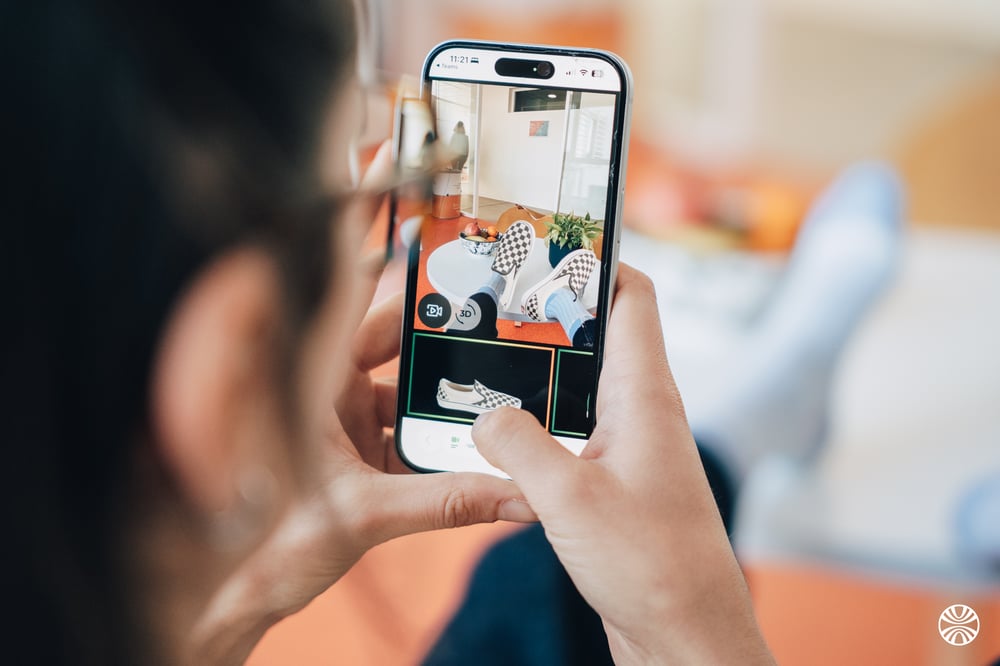
Footwear ecommerce teams face a clear challenge: shoppers want to feel confident before they buy shoes online. Product photos help, but they rarely answer every question about shape, scale, color, and how a shoe looks on foot. This shoe brand Augmented Reality (AR) try-on case study shows how one footwear team used augmented reality to reduce hesitation and support stronger conversion.
🔑 Key Takeaways
- AR try-on works best when it solves visual hesitation on high-intent footwear product pages.
- Product confidence can improve when shoppers see shoe shape, color, and scale on their own feet.
- Start with strategic SKUs such as launches, bestsellers, premium styles, and color-led products.
- Track assisted conversion behavior alongside direct sales to measure AR try-on’s full journey impact.
Why AR try-on became a conversion priority
For many footwear brands, product discovery starts on a mobile screen. Shoppers compare styles, zoom into materials, read reviews, and check sizing guidance. Yet one question often remains open: how will this shoe look on me?
That question matters because footwear is both functional and emotional. A shopper may like a sneaker in product images, but still hesitate if they cannot picture the silhouette with their own outfit, foot shape, or preferred style.
AR try-on helps solve this problem by placing a digital shoe model on the shopper’s feet through a smartphone caera. It does not replace fit accuracy, size guidance, or strong product content. It adds a visual layer that helps shoppers evaluate the product faster.
For this shoe brand, the goal was not to launch a novelty feature. The ecommerce team wanted to improve product confidence on mobile, increase engagement on high-traffic product pages, and measure whether virtual shoe try-on could support conversion.
The challenge before AR try-on
Before launching AR try-on, the brand had a strong ecommerce foundation. Product pages included multiple images, descriptions, size information, and lifestyle photography. Still, the team saw friction in three key areas.
Product pages lacked real-life context
Standard product images showed the shoe clearly, but they did not always show how the shoe looked from the shopper’s point of view. This was especially important for sneakers, fashion-forward styles, and seasonal launches where shape and color drove purchase intent.
The team found that shoppers often moved between product pages, image galleries, and social content before making a decision. That behavior suggested interest, but also hesitation.
Mobile shoppers needed faster reassurance
Most product discovery happened on mobile. The brand needed a visual experience that worked quickly, without forcing shoppers to download an app or leave the product page.
Speed mattered. If the feature was too slow, too hidden, or too complex, shoppers would ignore it. The AR experience had to feel like a natural extension of the product page.
Return pressure made confidence more valuable
Footwear returns can be expensive. Size, fit, color perception, and style mismatch all play a role. AR try-on does not solve every return driver, but it can help reduce uncertainty linked to look, proportion, and visual expectation.
The ecommerce team framed AR try-on as a confidence tool. The main question was simple: could better visualization help more shoppers move from consideration to purchase?
The AR try-on rollout
The brand started with a focused rollout instead of digitizing the entire catalog at once. This made the project easier to manage and easier to measure.
Choosing the right product category
The team selected products with strong visual appeal and meaningful traffic. These included new sneaker releases, color-led styles, and products already receiving high product page visits.
This approach helped the brand avoid a common mistake: launching AR on low-demand SKUs and then struggling to prove impact. High-intent products gave the feature enough visibility to generate useful data.
Creating realistic digital shoe assets
AR try-on depends on the quality of the 3D shoe model. The digital asset must represent the product accurately, including color, materials, proportions, and key design details.
For footwear brands, this step is critical. A low-quality model can create disappointment or unrealistic expectations. A strong model supports trust because shoppers can see the product from a more natural point of view.
Brands evaluating this process often start with 3D shoe digitization before expanding into interactive visualization and AR experiences.
Connecting AR to the product page journey
The AR button was placed near the main product visuals, not buried below the fold. The call to action was clear and direct, such as “Try on in AR” or “See it on your feet.”
The team also made sure the experience worked on mobile browsers. This reduced friction and kept shoppers inside the buying journey.
AR try-on was not treated as a separate campaign asset. It became part of the product page experience, supporting the same decision flow as images, descriptions, reviews, and size guidance.
The business impact of virtual shoe try-on
After launch, the brand measured behavior across AR-enabled product pages. The most important signals were engagement rate, time with the product, add-to-cart behavior, and assisted conversion.
The results reflected a broader market pattern. Among leading brands that have shared measured AR impact are ASICS and FARFETCH. ASICS used Snapchat’s shoe AR try-on for the GEL-KAYANO 29 and NOVABLAST 3, reporting a 13-point lift in ad awareness. FARFETCH also reported that sneakers featuring virtual try-on generated 32% higher engagement and a 5% increase in add-to-bag rate compared with standard listings.
Stronger product engagement
AR try-on gave shoppers a reason to interact with the product instead of passively scrolling. This matters because engaged shoppers often show stronger purchase intent than visitors who only view static images.
The brand saw that AR users spent more time evaluating selected styles. They looked at the shoe from different angles, compared colorways, and returned to the product gallery with more context.
This did not mean every AR interaction produced an immediate purchase. Some shoppers used the feature earlier in the journey. Others returned later through retargeting, email, or organic search. That is why assisted conversion became a key metric.
Higher add-to-cart confidence
The most valuable shift came from product confidence. Shoppers who used AR try-on could answer visual questions faster. They could see whether a chunky sneaker looked too bold, whether a white sole felt too bright, or whether a colorway matched their style.
This helped reduce the gap between interest and action. The shopper still needed size guidance and delivery information, but the visual decision became easier.
For ecommerce teams, that confidence can support better add-to-cart behavior, especially when AR is combined with strong product data, size support, and clear return policies.
Better omnichannel value
The brand also found value beyond the product page. AR try-on content supported paid social, email campaigns, retail media, and launch storytelling.
This matters for omnichannel footwear retail. A shopper may discover a shoe through a mobile campaign, try it virtually, visit a store, and buy later online. AR becomes one touchpoint in a larger journey, not a standalone feature.
When connected to product analytics, the feature can also help teams understand which styles generate curiosity, which colorways attract interaction, and where shoppers hesitate.
Lessons for footwear ecommerce teams
This shoe brand AR try-on case study shows that results depend on execution. The technology matters, but the strategy around the technology matters more.
Start with models that have high purchase intent
AR try-on should begin where it can influence real decisions. New launches, bestsellers, premium styles, and visually distinctive shoes are good candidates.
Starting with high-intent SKUs also helps teams compare performance more clearly. If a product already receives qualified traffic, AR can be measured against meaningful commercial behavior.
Track assisted conversion
Direct conversion is important, but it is not the only signal. AR try-on often supports consideration. A shopper may interact with the feature, leave the site, then return later through another channel.
Teams should track AR engagement, add-to-cart rate, product page depth, return visits, and assisted revenue. This gives a more accurate view of business impact.
Keep the experience simple
AR try-on should be easy to find and easy to use. Shoppers should not need instructions, app downloads, or account creation before they can see the product.
The best experience feels immediate. A clear button, fast loading, realistic rendering, and a smooth return to the product page all help maintain purchase momentum.
What this means for footwear retailers
AR try-on can help footwear retailers make online shopping more visual, interactive, and confidence-driven. It works best when it supports clear business goals, such as conversion improvement, product engagement, and better digital merchandising.
It also works best as part of a broader product visualization strategy. A shopper may use a 3D shoe viewer to inspect product details, then use virtual try-on of shoes to evaluate how the style looks on foot.
This combination gives ecommerce teams more ways to reduce uncertainty. It also gives shoppers more control over the evaluation process.
The key is to avoid treating AR as a gimmick. The strongest business cases connect the feature to merchandising, analytics, mobile UX, and product content quality.
Conclusion
AR try-on can support stronger footwear ecommerce performance when it solves a real shopper problem. In this case, the brand used virtual shoe try-on to improve visual confidence, increase engagement, and help shoppers move closer to purchase. For retailers, the lesson is clear: start with the right products, measure the right behaviors, and make AR part of the product page journey.
Frequently Asked Questions
How can a shoe brand measure AR try-on performance?
A shoe brand should track AR engagement rate, product page interaction, add-to-cart rate, assisted conversion, return visits, and revenue from AR-enabled products. Direct conversion is useful, but assisted metrics often show a clearer view of how virtual try-on supports the full buying journey.
Which footwear products should launch with AR try-on first?
The best first candidates are products with strong traffic, high visual appeal, or strategic value. New sneaker releases, bestsellers, premium styles, and color-led products often work well because shoppers are more likely to engage and because the data is easier to interpret.
Does AR try-on reduce footwear returns?
AR try-on can help reduce returns linked to visual uncertainty, such as color, style, and proportion. It does not replace accurate sizing tools or fit guidance. For the best return impact, retailers should combine AR try-on with size support, strong product data, and clear product imagery.
Is AR shoe try-on useful for omnichannel retail?
Yes. AR try-on can support product discovery across ecommerce, paid social, email, and in-store journeys. A shopper may try a shoe virtually on mobile, compare styles later, and complete the purchase online or in store. This makes AR valuable beyond the product page.
Sources
- ASICS drives 13pt ad awareness lift with try-on Lens on Snapchat (2023) https://forbusiness.snapchat.com/inspiration/shoe-try-on
- Wanna x FARFETCH Virtual Try-On Case Study (2022) https://wanna.fashion/farfetchapp
- Shop adds 3D and augmented reality previews (2022) https://changelog.shopify.com/posts/shop-adds-3d-and-augmented-reality-ar-previews
- Does AR virtual try-on boost online apparel purchase intentions? (2025) https://doi.org/10.1108/YC-08-2024-2196

Fittingbox Footwear
Fittingbox Footwear is a dedicated business unit of Fittingbox, specialized in 3D and augmented reality solutions for the footwear industry. It offers ultrarealistic 3D digitization, immersive virtual try-on, and flexible integration — ranging from plug-and-play tools to fully customizable implementations.