
Blog Technology Expertise E-Commerce 09/16/2026 10 min read
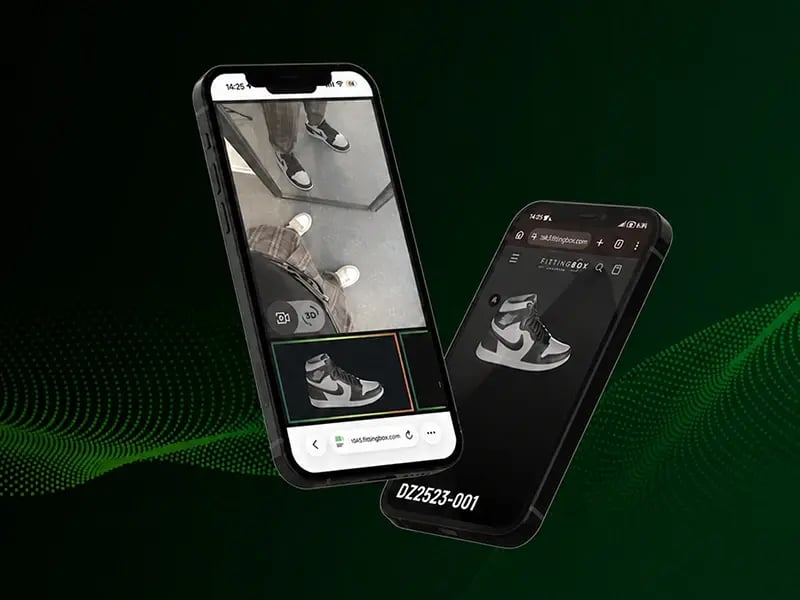
AR shoe try-on helps footwear retailers bring a more visual, interactive product experience to digital channels. Instead of relying only on static images, shoppers can see how a shoe looks on their feet through a smartphone. For retailers, the value is practical: better product understanding, stronger engagement, and more confident purchase decisions across ecommerce and omnichannel journeys.
AR shoe try-on as a practical retail tool
Augmented reality shoe try-on allows shoppers to visualize footwear on their feet using a camera-enabled device. The experience usually works through a mobile browser, app, product page, QR code, or social commerce interface.
The shopper selects a shoe, activates the camera, points it at their feet, and sees a digital version of the product aligned with their movement. The result is not a physical fitting. It is a visual try-on that helps answer one important question: how will this shoe look on me?
How the experience works for shoppers
A typical AR shoe try-on journey includes four steps:
- The shopper opens the product page or AR experience.
- The camera detects the foot position.
- A 3D shoe model is placed over the shopper’s foot.
- The shopper views the shoe from different angles before deciding.
This flow is simple, but the technology behind it requires accurate 3D assets, stable tracking, realistic rendering, and fast loading. A weak experience can create doubt. A smooth experience can make the product easier to evaluate.
Why footwear is a strong use case
Footwear is highly visual and personal. Color, shape, profile, material, sole thickness, and style all influence purchase decisions. Standard photos can show these details, but they do not always show how the shoe looks on the shopper.
This matters because footwear ecommerce carries a high level of uncertainty. The British Footwear Association reported online footwear return figures around 19% on average in its member survey, with some retailers reporting higher rates. More broadly, NRF and Happy Returns estimated that 19.3% of online sales would be returned in 2025.
AR shoe try-on does not solve every return reason. It does not replace size recommendation or physical fit. But it can reduce visual uncertainty, especially when shoppers compare styles, colors, silhouettes, and outfit compatibility.
Business benefits for footwear retailers
The business case for AR shoe try-on should not be built on novelty. It should be built on customer behavior. Shoppers need confidence before they buy footwear online. Retailers need tools that support that confidence without adding friction.
Better product understanding
Footwear product pages often rely on several static images, size charts, and written descriptions. These assets remain useful. AR adds another layer by helping shoppers understand the shoe in relation to their own body.
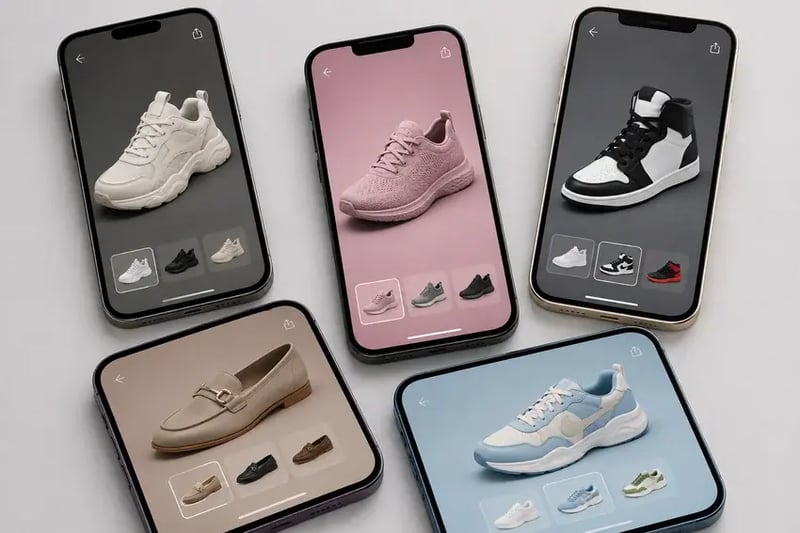
For example, a chunky sneaker, slim loafer, or high-top silhouette can look very different on-foot than it does in a studio image. AR shoe try-on gives shoppers a more personal view of proportion, color, and styling potential.
This is especially useful for product categories where visual details strongly influence the decision:
- Fashion sneakers
- Luxury footwear
- Kids’ shoes
- Performance lifestyle shoes
- Seasonal collections
- Limited-edition drops
Stronger ecommerce engagement
AR creates an active product experience. Instead of scrolling through images, shoppers interact with the product. They move, rotate, compare, and test different colors or models.
Recent research on AR shopping found that vivid and interactive AR experiences can increase perceived usefulness, enjoyment, customer engagement, and purchase intention. For footwear retailers, that engagement can be valuable at a point where shoppers often hesitate.
Engagement should be measured with practical ecommerce metrics. These may include product page interaction rate, AR launch rate, time on product page, add-to-cart rate, and conversion rate among shoppers who used the feature.
More confident purchase decisions
Retailers should think of AR shoe try-on as a confidence layer. It supports decision-making by making the product feel less abstract.
This is important because returns are a major cost center. Radial’s 2025 returns research found that 56% of apparel and footwear brands surveyed were at or above 30% return rates. NRF and Happy Returns also projected $849.9 billion in total US retail returns for 2025.
AR shoe try-on will not eliminate returns caused by size, comfort, or delivery expectations. However, it can help reduce avoidable hesitation and mismatched expectations related to style, look, and product visualization.
Core requirements for successful AR shoe try-on
A successful AR shoe try-on experience depends on more than placing a feature on a product page. Retailers need a reliable content pipeline, a clear user experience, and a measurement plan.
Accurate 3D shoe assets
The 3D model is the foundation of the experience. If the model is inaccurate, the AR experience loses credibility. Shape, color, textures, logo placement, outsole details, and material finish all matter.
Retailers can build 3D assets from product photography, 3D scanning, CAD files, or specialized digitization workflows. For footwear teams managing large catalogs, scalability is critical. The asset process should support new collections, colorways, and seasonal launches without slowing down merchandising.
When evaluating 3D production, focus on:
- Visual accuracy across materials and colorways
- File weight and loading speed
- Compatibility with ecommerce platforms
- Reuse across AR, 3D viewers, and marketing channels
- Quality control before publication
Retailers that need to build scalable 3D footwear content can explore specialized 3D shoe digitization workflows to support product visualization and AR use cases.
Mobile-first performance
Most AR shoe try-on experiences happen on smartphones. This means performance is not optional. A slow-loading or unstable experience can hurt the product journey instead of improving it.
Retailers should test AR shoe try-on on common devices, browsers, operating systems, and network conditions. The goal is simple: the experience should launch quickly, track accurately, and feel easy to use without instructions that slow the shopper down.
Good mobile UX includes clear calls to action, simple camera permissions, fast loading, and an easy path back to the product page or cart.
Clear placement in the customer journey
AR shoe try-on should appear where it helps the shopper make a decision. The most common placement is on the product detail page, near the image gallery, size selector, or call to action.
It can also support product discovery. For example, a retailer can let shoppers try several colorways from a collection page or campaign landing page. In stores, QR codes can help shoppers explore out-of-stock colors or online-only models.
The placement should match the intent. A shopper comparing colors needs a fast visual switch. A shopper evaluating a premium shoe may need AR, 3D product views, close-up materials, and size guidance together.
AR shoe try-on in an omnichannel strategy
AR shoe try-on is often discussed as an ecommerce feature, but its value can extend across the full retail journey. Footwear shoppers move between channels, devices, and store visits. AR can help create continuity.
Ecommerce product pages
On ecommerce product pages, AR shoe try-on can complement standard product photography, video, product descriptions, and customer reviews. It gives shoppers another way to evaluate the product before adding it to the cart.
For many retailers, the strongest setup combines AR with a 3D viewer of shoes. The 3D viewer helps shoppers inspect the product in detail. AR helps them visualize it on their feet.

In-store assisted selling
In physical stores, AR shoe try-on can support assisted selling when a size, color, or model is not available on the shelf. Store associates can use tablets, kiosks, or QR codes to show alternatives.
This is useful for omnichannel retailers with wide online catalogs and limited store inventory. Instead of losing the sale, the associate can help the shopper visualize the product and order it through a connected digital journey.
Social and campaign activation
AR shoe try-on can also support marketing campaigns. Product launches, influencer collaborations, and seasonal collections can use AR to increase participation and sharing.
The goal is not only entertainment. It is product discovery. When shoppers can try a new sneaker or boot style from a campaign page, they move from awareness to evaluation faster.
Measuring ROI and avoiding common mistakes
Retailers should evaluate AR shoe try-on with the same discipline used for any ecommerce feature. The question is not whether AR is impressive. The question is whether it improves shopper confidence and business outcomes.
KPIs to track
Useful KPIs include:
- AR try-on launch rate
- AR engagement time
- Add-to-cart rate after AR use
- Conversion rate for AR users versus non-users
- Return rate by product with AR coverage
- Product page bounce rate
- Revenue per visitor
Retailers should compare results by product category, price range, traffic source, and device type. A premium boot, lifestyle sneaker, and children’s shoe may not produce the same behavior.
Implementation risks to manage
The most common mistake is treating AR as a standalone feature. It should be part of a broader product experience that includes strong photography, clear sizing information, product details, reviews, and fast checkout.
Another risk is launching with poor 3D assets. If the shoe shape looks wrong, colors are inaccurate, or tracking feels unstable, shoppers may trust the product less. Quality control is essential.
A third risk is covering too little of the catalog. Retailers do not need to digitize everything at once, but they should prioritize products where AR can influence decisions. Start with high-traffic models, new launches, visually distinctive styles, and products with high consideration value.
Conclusion
AR shoe try-on gives footwear retailers a practical way to improve digital product visualization and shopper confidence. Its value is strongest when it is accurate, fast, easy to use, and connected to the wider ecommerce journey. For retailers, the best approach is to start with clear goals, prioritize the right products, measure performance, and use AR as part of a broader customer experience strategy.
Frequently Asked Questions
What is AR shoe try-on for retailers?
AR shoe try-on is a digital experience that lets shoppers visualize a 3D shoe model on their feet using a smartphone camera. For retailers, it supports product discovery, product page engagement, and customer confidence before purchase.
Does AR shoe try-on reduce footwear returns?
AR shoe try-on can help reduce returns linked to visual mismatch or product expectations. It does not replace size guidance or physical fit. The best results usually come when AR is combined with accurate sizing content, clear product details, and strong customer support.
Which footwear products should retailers prioritize for AR try-on?
Retailers should prioritize products where visual confidence matters most. Good candidates include bestsellers, new launches, premium shoes, fashion sneakers, high-return styles, and products with several colorways or distinctive silhouettes.
How can retailers measure AR shoe try-on performance?
Retailers can measure launch rate, engagement time, add-to-cart rate, conversion rate, revenue per visitor, and return rate for products with AR coverage. Comparing AR users with non-users helps teams understand the feature’s real impact.
Is AR shoe try-on only useful for ecommerce?
No. AR shoe try-on can also support stores, campaigns, social commerce, and assisted selling. In stores, it can help shoppers visualize colors or models that are not physically available, creating a stronger omnichannel experience.
Sources
- 2025 Retail Returns Landscape (2025) https://nrf.com/research/2025-retail-returns-landscape
- Augmented Reality In E-Commerce Market Report, 2030 (2026) https://www.grandviewresearch.com/industry-analysis/augmented-reality-e-commerce-market-report
- The State of Retail Returns 2025 (2025) https://www.radial.com/wp-content/uploads/2025/10/State-of-Returns_Report_2025_Final.pdf
- Footwear Return Rates: How Does Your Business Measure Up? (2025) https://britishfootwearassociation.co.uk/footwear-return-rates-bfa-member-survey/
- From screen to reality: How AR drives consumer engagement and purchase intention (2024) https://www.sciencedirect.com/science/article/pii/S2773067024000219

Fittingbox Footwear
Fittingbox Footwear is a dedicated business unit of Fittingbox, specialized in 3D and augmented reality solutions for the footwear industry. It offers ultrarealistic 3D digitization, immersive virtual try-on, and flexible integration — ranging from plug-and-play tools to fully customizable implementations.