
Blog E-Commerce 08/03/2026 10 min read
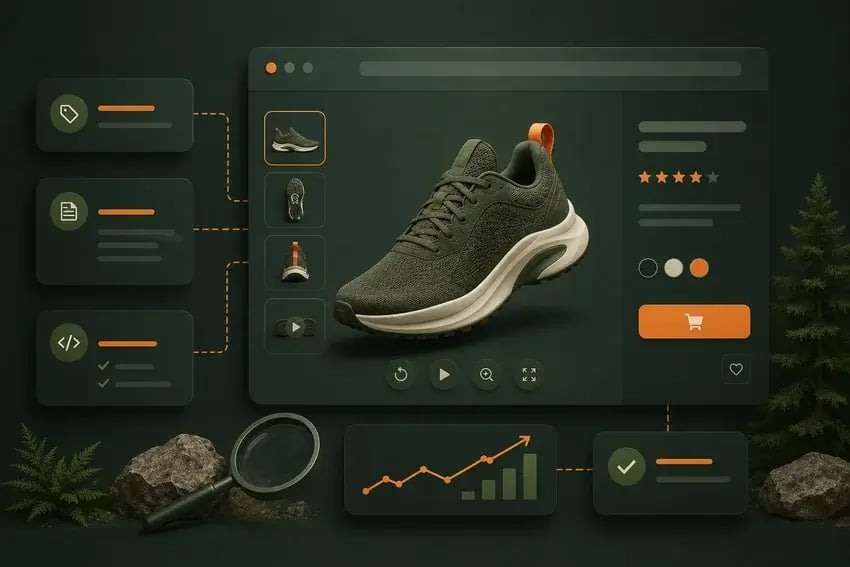
Three-dimensional product pages give footwear shoppers more visual context before they buy. But search engines still need clear metadata to understand the page, classify the product, and display useful information in search results. For ecommerce teams, metadata is not only an SEO task. It supports product discovery, qualified traffic, and a better path from search result to product page.
Metadata Is a Business Signal for 3D Product Pages
A footwear product page with a three-dimensional viewer, augmented reality feature, or virtual shoe fitting experience contains more value than a standard image gallery. Yet that value may not be obvious in search results unless the metadata explains it clearly.
Metadata helps search engines and shoppers answer simple questions before the click. What is the product? What type of shoe is it? Is the page useful for buying? Does it include an interactive experience that helps the shopper evaluate the shoe?
Google’s ecommerce guidance focuses on helping product pages become more discoverable through clear product information, crawlable content, and structured data. For footwear brands, this means metadata should connect the product, the shopping intent, and the visual experience in a precise way.
What changes when a product page includes 3D
A three-dimensional product page gives shoppers a richer way to inspect materials, shapes, soles, colorways, and design details. This can support confidence before purchase, especially when the product has technical, premium, or style-driven features.
The SEO challenge is that the visual experience itself is not enough. Search engines still rely on text signals, structured data, internal links, and page content to understand the page. Your title tag and meta description should make the commercial purpose clear, while the on-page content explains the interactive feature naturally.
Why metadata must match shopper intent
Footwear shoppers search in different ways. Some use product names. Others search by style, activity, material, brand, color, or fit concern. Metadata should reflect the strongest intent behind the page.
For example, a running shoe page should not lead with “3D viewer” if the shopper is mainly comparing cushioning, support, and size. The three-dimensional feature matters, but it should support the product value rather than replace it.

Title Tags That Clarify Product Value
The title tag is one of the clearest page-level signals for search engines and one of the first elements shoppers may see in search results. For footwear ecommerce, the title should identify the product first, then add a differentiator when useful.
A strong title tag for a three-dimensional footwear product page usually includes the product type, product name or model, brand when relevant, and one concise interactive cue.
Example structure:
- Product name | Shoe type with 3D view
- Brand model running shoes | View in 3D
- Leather boots for women | Explore product details
Lead with the product, not the technology
Many ecommerce teams make the mistake of overemphasizing the technology. A shopper looking for trail running shoes is not searching for a viewer first. They are searching for the right shoe.
Use the technology as a confidence signal. The product remains the main topic. The three-dimensional experience explains why the page may help the shopper evaluate the item better than a flat image gallery.
| Weak title tag | Better title tag |
|---|---|
| 3D Viewer Product Page | Men’s Trail Running Shoes | View in 3D |
| Interactive Shoe Experience | Black Leather Chelsea Boots | 3D Product View |
| Virtual Shoe Page | Women’s White Sneakers | Try the Look Virtually |
Add 3D or virtual try-on only when it helps the click
Not every product title needs to mention the interactive feature. If the product has strong branded demand, prioritize the model name. If the feature helps differentiate similar products, add a short phrase such as “View in 3D” or “Virtual try-on available.”
This is especially useful for footwear pages where visual details affect purchase decisions. Examples include premium sneakers, textured materials, technical soles, luxury finishes, limited editions, and complex colorways.
Meta Descriptions That Improve Qualified Traffic
Google explains that meta descriptions can be used to generate snippets when they provide a relevant summary of the page. That makes them useful for attracting qualified traffic, even if they are not a direct ranking guarantee.
For three-dimensional footwear pages, the meta description should summarize the product and explain how the page helps the shopper decide. Avoid vague language. Use concrete details that match the product experience.
Make the page promise specific
A strong meta description tells the shopper what they can do on the page. Instead of saying “Discover our innovative shoe experience,” describe the action and benefit.
Example:
Explore the women’s leather sneaker in 3D, compare color details, inspect the sole, and review key product information before you buy.
This type of description works because it connects the interactive asset to buyer confidence. It also supports qualified clicks by setting accurate expectations.
Connect visual interaction to buyer confidence
Footwear returns are often connected to uncertainty around size, fit, appearance, or expectations. Recent retail return research continues to show that online returns create major cost pressure for ecommerce brands, while shoes remain among the categories shoppers return frequently.
Metadata cannot solve returns by itself. But it can send shoppers to pages that give them clearer information before purchase. When your product page includes a 3D viewer of shoes, the meta description can highlight inspection, angles, texture, and product detail.
Structured Data for Footwear Product Pages
Structured data helps search engines understand product information in a standardized format. For ecommerce pages, Google highlights product structured data as a way to support richer search result features when the page meets eligibility requirements.
For footwear, the basics include product name, image, description, brand, offers, availability, price, reviews when applicable, and SKU or product identifiers. These details should match the visible product page content.
Product schema basics
The most important rule is consistency. If the page shows a price, the structured data should show the same price. If the product is out of stock, availability should reflect that. If reviews appear on the page, the review markup must match visible reviews.
For product pages with three-dimensional assets, the structured data should still focus on the product. The interactive viewer can be described in the visible content, supported by image and media signals, and connected through internal links where relevant.
Rich results and product eligibility
Product structured data can help Google understand details that may appear in rich results, such as price, availability, ratings, and shipping information when eligible. This matters because ecommerce shoppers often compare results quickly before choosing a page.
Three-dimensional visualization does not replace product schema. It adds context to the shopping experience. The page still needs strong product data, crawlable descriptions, optimized images, and accurate commercial information.
Metadata Templates for 3D Footwear Pages
Templates help ecommerce teams scale metadata across large catalogs. The goal is not to create repetitive pages. The goal is to create a flexible structure that can adapt to product type, intent, and interactive features.
Sneakers
Title tag: [Product Name] Sneakers | View Details in 3D
Meta description: Explore [Product Name] sneakers with a three-dimensional product view, detailed images, color information, and key specs before purchase.
Boots
Title tag: [Product Name] Boots | 3D Product View
Meta description: Inspect [Product Name] boots from multiple angles, review material details, compare color options, and check product information online.
Sandals
Title tag: [Product Name] Sandals | Explore the Fit and Details
Meta description: View [Product Name] sandals with detailed product visuals, strap design information, available colors, and shopping details.
Performance shoes
Title tag: [Product Name] Running Shoes | View in 3D
Meta description: Explore [Product Name] running shoes in 3D, inspect the sole, review cushioning details, and compare product features before buying.
Common Metadata Mistakes on 3D Product Pages
Three-dimensional product pages often underperform in search because the metadata is either too generic or too focused on the technology. The page may deliver a strong visual experience, but the search result does not explain why the shopper should click.
Overpromising the experience
Avoid claims that the page cannot support. If the page offers a three-dimensional viewer, do not call it virtual try-on. If the shopper can rotate the shoe but not see it on their foot, the metadata must be clear.
This distinction matters for trust. A shopper who expects a virtual shoe fitting experience and lands on a standard product viewer may leave quickly. Accurate metadata protects the user experience and the brand experience.
Repeating the same meta description
Large footwear catalogs often reuse one description across hundreds of product pages. This makes search snippets less useful and weakens product differentiation.
Use controlled templates, but add variables that matter. These can include product type, material, color, activity, gender category, collection, and interactive feature. A boot page and a running shoe page should not have the same search result message.
Hiding commercial details from search engines
Some interactive product pages rely heavily on scripts, visual modules, or dynamic content. Make sure essential product information remains crawlable and visible in the HTML. This includes product name, description, price, availability, images, size information, and key attributes.
If your footwear catalog uses 3D digitization of shoes, the resulting assets should support the product page. They should not replace the basic SEO signals search engines and shoppers need.
Connecting Metadata to the Parent SEO Strategy
As a child article of a broader footwear ecommerce SEO topic, this page should support the parent cluster by going deeper into one practical area. The parent article can explain the full SEO strategy for three-dimensional and augmented reality product pages. This child article focuses on metadata execution.
Cluster consistency
Use consistent terminology across the cluster. If the parent page uses “3D product pages,” “AR product pages,” and “virtual try-on,” this article should use those concepts naturally while staying focused on metadata.
This helps readers move from strategy to implementation. It also helps search engines understand the relationship between the parent topic and the child page.
Internal linking
Internal links should support understanding. For example, a section about product visualization can link to a resource about a three-dimensional viewer. A section about fit confidence can link to a page about virtual try-on of shoes.
Do not force links into every section. Use them where they help ecommerce, SEO, UX, or digital teams understand the role of the technology.
Conclusion
Metadata for three-dimensional footwear product pages should make the product clear, the experience accurate, and the search result useful. Strong title tags, specific meta descriptions, structured data, and consistent internal linking help shoppers understand the page before they click. For footwear ecommerce teams, metadata is a practical way to connect product visualization, SEO performance, and buyer confidence.
Frequently Asked Questions
Should 3D be included in every footwear product page title tag?
No. Include 3D only when it improves clarity or click relevance. The product name, shoe type, brand, and purchase intent usually matter first. Add “View in 3D” when the interactive feature is a real differentiator for comparison, inspection, or confidence.
Can metadata help reduce footwear product returns?
Metadata does not reduce returns directly. It helps attract shoppers to pages that provide clearer product information. When the page includes accurate descriptions, detailed visuals, three-dimensional views, and fit guidance, shoppers can make better decisions before ordering.
What structured data matters most for footwear ecommerce pages?
Product structured data is the priority. It should include accurate product name, images, description, brand, offers, price, availability, and reviews when visible on the page. This helps search engines understand the page and may support richer product search experiences.
How can ecommerce teams scale metadata across large footwear catalogs?
Use flexible templates with product-specific variables. Include product name, shoe type, material, color, activity, collection, and relevant interactive features. Avoid duplicate descriptions across many pages, because each product should communicate its own value in search results.
Sources
- SEO Best Practices for Ecommerce Sites, Google Search Central (2026) https://developers.google.com/search/docs/specialty/ecommerce
- Intro to Product Structured Data, Google Search Central (2026) https://developers.google.com/search/docs/appearance/structured-data/product
- How to Write Meta Descriptions, Google Search Central (2026) https://developers.google.com/search/docs/appearance/snippet
- Product Details Page UX Research Studies, Baymard Institute (2026) https://baymard.com/research/product-page
- Clothing & Shoes Are the Most Returned Online Purchases, Statista (2025) https://www.statista.com/chart/34373/most-returned-product-categories-purchased-online/

Fittingbox Footwear
Fittingbox Footwear is a dedicated business unit of Fittingbox, specialized in 3D and augmented reality solutions for the footwear industry. It offers ultrarealistic 3D digitization, immersive virtual try-on, and flexible integration — ranging from plug-and-play tools to fully customizable implementations.