
Blog E-Commerce 09/09/2026 10 min read
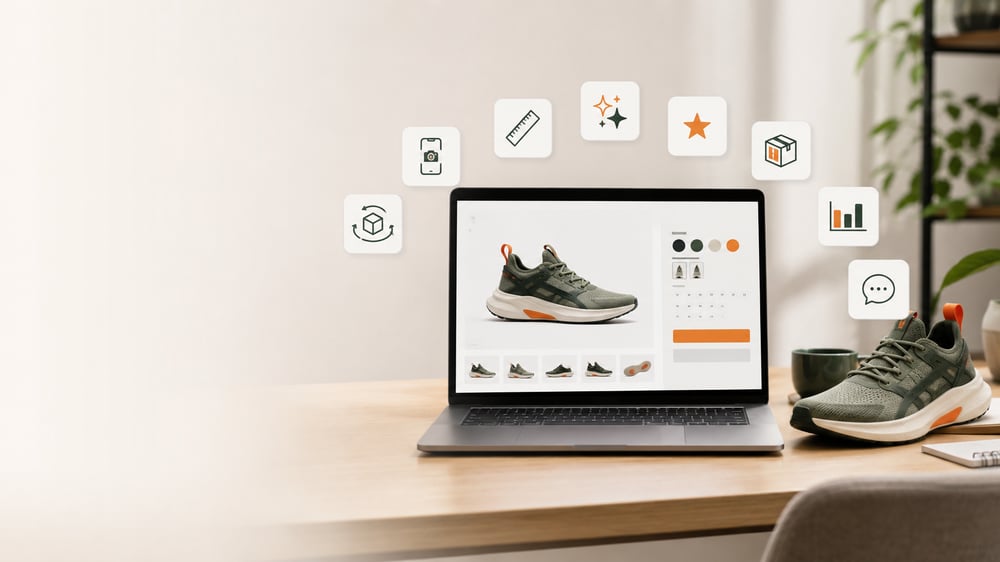
Selling shoes online requires more than attractive product pages. Shoppers need to find the right model, understand the fit, trust the product, and feel confident before checkout. The right ecommerce plugins can support each of these steps and help footwear brands improve conversion, engagement, and post-purchase satisfaction.
Ecommerce Plugins That Improve Shoe Discovery
Before shoppers compare sizes or read reviews, they need to find the right product. This is where ecommerce plugins for product discovery can create strong value. They help visitors move faster from browsing to a relevant shoe selection.
For footwear brands, discovery is not only about showing more products. It is about guiding shoppers toward the right category, style, use case, color, size range, and fit expectation.
Product Recommendation Quiz Plugins
A product recommendation quiz helps shoppers answer a few guided questions and receive product suggestions from the catalog. For shoe ecommerce, questions can cover use case, preferred style, foot width, activity level, color preference, and budget.
This plugin category is useful when a catalog has many similar products. A running shoe store, for example, can guide shoppers toward daily trainers, trail shoes, racing shoes, or walking shoes based on their answers.
Product quiz plugins can also collect zero-party data. This helps marketing teams understand customer preferences and create better email, SMS, or retargeting segments after the visit.
Search and Filtering Plugins
Search and filtering plugins help shoppers narrow a footwear catalog by size, color, gender, material, activity, heel height, closure type, brand, or price. This matters because shoe shoppers often arrive with a specific need.
If filters are weak, shoppers may leave before seeing the right product. If filters are clear and fast, they reduce friction and make the catalog easier to explore.
For footwear ecommerce, filters should reflect real buying behavior. A sneaker buyer may care about cushioning and activity, while a formal shoe buyer may care about leather type, sole, color, and occasion.
Reviews and User-Generated Content Plugins

Reviews help shoppers understand how shoes feel in real life. A product description may say “true to size,” but customer reviews can reveal whether a shoe feels narrow, stiff, roomy, light, or comfortable after several hours.
User-generated content can also support visual confidence. Photos from real customers help shoppers see product shape, color, proportions, and styling outside studio photography.
For footwear brands, reviews should be structured. Ask customers about size accuracy, width, comfort, arch support, and use case. This turns reviews into useful decision support, not only social proof.
Ecommerce Plugins That Increase Fit Confidence
Fit confidence is one of the biggest challenges in online shoe sales. A shopper may like the design but still hesitate because they are unsure about size, width, or comfort.
The following plugin categories help reduce this hesitation. They do not replace product quality or clear merchandising, but they can make the buying decision easier.
Size Chart and Size Recommender Plugins
Size chart plugins show product measurements in a clear format. More advanced size recommender plugins can suggest a size based on shopper inputs, brand rules, fit preferences, or product-specific guidance.
For shoe sales, this category is important because sizing can vary across brands, categories, and models. Boots, sandals, sneakers, loafers, and performance footwear may all fit differently.
A strong size plugin should let ecommerce teams assign charts by product, category, country, or brand. WooCommerce, for example, lists size chart and size recommender extensions that support product-specific charts, smart guides, and recommendation features.
Virtual Try-On Plugins
Virtual try-on plugins let shoppers preview how a shoe may look on them through a mobile camera, image upload, or AR experience. For footwear ecommerce, this improves visual confidence and product engagement.
This category is especially useful for sneakers, sandals, statement shoes, and fashion footwear where appearance on foot strongly influences purchase decisions.
Some Shopify virtual try-on apps are built specifically around shoe try-on and 3D or AR experiences. For example, Fittingbox Footwear has its own Shopiffy App, specifically made for retailers. Discover it on the link below:
Add virtual shoe fitting to your ecommerce with AI-generated 3D models.
3D and AR Product Viewer Plugins
3D and AR product viewers help shoppers inspect shoes from multiple angles. Instead of relying only on flat images, customers can rotate the shoe, examine the outsole, view the profile, and understand design details more clearly.
This is useful for footwear because shape matters. Toe box, heel height, sole structure, material finish, and proportions are easier to understand when the shopper can explore the product interactively.
For brands that want a stronger visual experience, 3D assets can also support broader ecommerce use cases. A 3D viewer of shoes can improve product understanding, while virtual try-on of shoes can connect visualization with customer engagement.
Ecommerce Plugins That Support Conversion and Retention
Once shoppers find the right product and feel more confident about fit, ecommerce teams still need to support checkout, follow-up, and post-purchase experience. This is where retention and operations plugins matter.
For footwear brands, the plugin stack should not only focus on the product page. It should also help recover hesitant shoppers, reduce avoidable returns, and protect long-term customer value.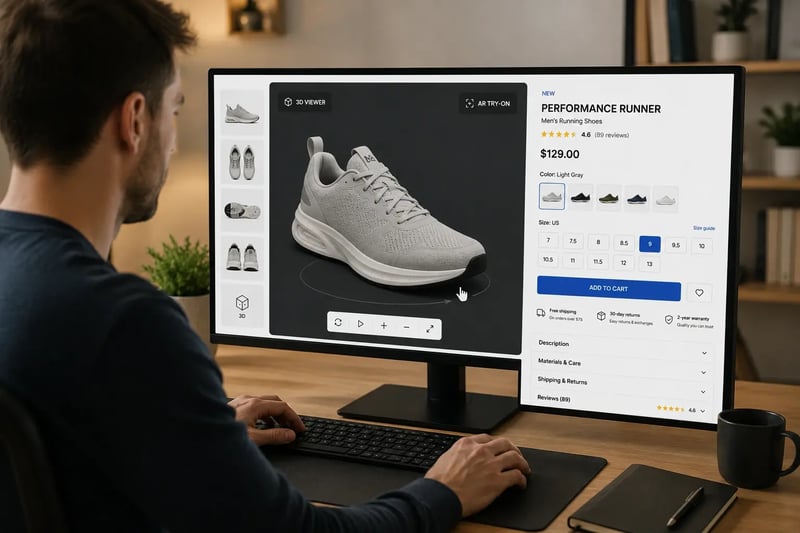
Cart Recovery and Email Automation Plugins
Cart recovery plugins help bring shoppers back after they leave without buying. For online shoe sales, this can be valuable because shoppers often compare models, sizes, colors, and prices before making a final decision.
Email and SMS automation can also support the full footwear journey. A brand can send product education, fit guidance, back-in-stock alerts, care tips, or reminders when a shopper abandons a product page.
The best approach is not to send generic promotions only. Use behavior-based messages that help the shopper complete the decision, such as “still choosing your size?” or “compare these similar sneakers.”
Returns and Exchange Management Plugins
Returns and exchange plugins help brands manage post-purchase flows more efficiently. They can support return requests, exchange options, refund rules, return reasons, and customer communication.
This matters because returns remain a major cost for retailers. The NRF and Happy Returns 2024 report estimated that total retail returns would reach $890 billion in 2024.
For footwear ecommerce, return reason data is especially useful. If many customers return a shoe because it runs narrow, the brand can improve the product page, update size guidance, or adjust recommendations.
Plugin Stack Comparison for Shoe Ecommerce
The table below shows how each plugin category supports a different stage of the online shoe buying journey. It can help ecommerce teams prioritize based on their biggest sales friction.
| Plugin category | Main ecommerce role | Footwear business value |
|---|---|---|
| Product quiz | Guided product discovery | Helps shoppers find relevant shoes faster |
| Search and filters | Catalog navigation | Reduces friction across large footwear catalogs |
| Reviews and UGC | Trust building | Clarifies comfort, fit, and real-life product use |
| Size recommender | Fit guidance | Reduces size hesitation before checkout |
| Virtual try-on | Visual confidence | Lets shoppers preview shoes in a more engaging way |
| 3D and AR viewer | Product visualization | Improves understanding of shape and details |
| Cart recovery | Conversion support | Brings undecided shoppers back to purchase |
| Returns management | Post-purchase optimization | Captures return reasons and supports exchanges |
How to Choose the Right Plugin Stack for Footwear Ecommerce
The best ecommerce plugins for shoe sales depend on your catalog, platform, customer behavior, and operational goals. A small footwear brand does not need the same stack as a global retailer with thousands of SKUs.
Instead of installing many tools at once, ecommerce teams should start with the biggest source of friction. Then they can measure performance and expand the stack over time.
Start With Your Biggest Sales Friction
If shoppers leave product pages without adding to cart, product visualization or fit guidance may be the priority. If shoppers browse but do not find relevant products, search, filtering, or quiz-based discovery may matter more.
If returns are the main issue, size recommendation and returns management should be reviewed together. Return reasons can reveal whether the issue is product information, sizing, expectations, or product quality.
Check Platform Fit and Catalog Complexity
Plugin choice depends on your ecommerce platform. Shopify, WooCommerce, Adobe Commerce, and BigCommerce each have different app ecosystems, integration methods, and technical constraints.
Catalog complexity also matters. A brand with a narrow sneaker catalog may need a simple size chart and virtual try-on. A multi-brand retailer may need advanced search, model-level fit data, and more complex product recommendation logic.
Measure Impact After Launch
Every plugin should have a clear performance goal. Before launch, define which metric you want to improve, such as add-to-cart rate, conversion rate, average order value, return rate, exchange rate, or customer support tickets.
After launch, compare results by product category, traffic source, device, and customer segment. This helps you understand whether the plugin is improving the shopping experience or simply adding complexity.
For visual tools, also track engagement. If shoppers interact with a 3D viewer or try-on feature and convert at a higher rate, that signal can support broader rollout across the catalog.
Conclusion
Ecommerce plugins can help footwear brands improve online shoe sales when they solve real customer problems. Product quizzes, filters, reviews, size recommenders, virtual try-on, 3D viewers, cart recovery, and returns tools each support a different stage of the journey. The strongest results come from choosing plugins that improve fit confidence, product discovery, and purchase clarity.

Frequently Asked Questions
What ecommerce plugins help increase online shoe sales?
The most useful ecommerce plugins for online shoe sales usually support product discovery, fit confidence, visualization, social proof, cart recovery, and returns management. Examples include product quiz tools, search filters, size recommenders, virtual try-on, 3D viewers, review tools, email automation, and exchange management plugins.
Are size chart plugins important for footwear ecommerce?
Yes. Size chart plugins help shoppers understand product measurements before they buy. For footwear, they are especially useful when charts can be assigned by product, brand, category, or country. More advanced size recommender plugins can also help reduce hesitation by suggesting a size based on shopper inputs.
Can virtual try-on plugins improve shoe ecommerce conversion?
Virtual try-on plugins can support conversion by increasing visual confidence and engagement. They help shoppers preview how shoes may look before purchase. Their impact depends on product category, image quality, user experience, catalog coverage, and how well the feature is integrated into the product page.
How should a footwear brand choose ecommerce plugins?
Start by identifying the main sales friction. If shoppers struggle to find products, prioritize search or quiz tools. If they hesitate on size, prioritize size guidance. If visual confidence is weak, consider 3D or virtual try-on. Then measure results by conversion, engagement, returns, and support requests.
- 2024 Consumer Returns in the Retail Industry Report (2024) https://www.aftership.com/ebooks/ecommerce-returns-report
- Product Recommendation Quiz, Shopify App Store (2026) https://apps.shopify.com/product-recommendation-quiz-revenuehunt
- Size Chart Recommender, WooCommerce Marketplace (2026) https://woocommerce.com/products/size-chart-recommender/
- WEARFITS: Shoes Try-On, Shopify App Store (2026) https://apps.shopify.com/wearfits-tryon
- Product Size Charts and Guides Documentation, WooCommerce (2026) https://woocommerce.com/document/product-size-charts-guides/

Fittingbox Footwear
Fittingbox Footwear is a dedicated business unit of Fittingbox, specialized in 3D and augmented reality solutions for the footwear industry. It offers ultrarealistic 3D digitization, immersive virtual try-on, and flexible integration — ranging from plug-and-play tools to fully customizable implementations.