
Blog E-Commerce 09/02/2026 8 min read

AI foot measurement is becoming a practical part of virtual try-on for footwear ecommerce. It helps shoppers understand how shoes may fit before they buy, not only how they look. For footwear brands and retailers, this technology connects product visualization, sizing confidence, and online customer experience in one digital journey.
AI Foot Measurement as the Fit Layer of Virtual Try-On
Virtual try-on lets shoppers preview shoes in a digital environment. AI foot measurement adds another layer: fit understanding. Instead of showing only a visual overlay, it helps estimate the shopper’s foot dimensions and connects those measurements with the shoe being considered.
From Visual Preview to Fit Confidence
AI-powered foot measurement helps turn virtual try-on into a more complete decision-making tool. Shoppers can see how a shoe looks, while also receiving fit-related guidance based on their own foot profile.
This creates a stronger experience than visual try-on alone. The shopper is not only asking, “Do I like this style?” They are also asking, “Does this shoe make sense for me?”
Why Standard Size Charts Are Limited
Traditional size charts are useful, but they often rely on broad measurements and generic size conversions. They rarely account for differences in foot width, instep height, toe shape, or fit preference.
For footwear brands, this creates friction at the purchase stage. A shopper may like the product but hesitate because they are unsure whether the size will feel right.
How AI Adds Personalization
AI foot measurement helps close the gap between product information and individual fit expectations. It uses computer vision, machine learning, and measurement models to estimate foot characteristics from digital inputs.
These inputs can come from smartphone images, video, guided scans, or interactive fitting flows. The result is a more informed try-on experience that supports confidence before purchase.
How AI Captures and Uses Foot Data
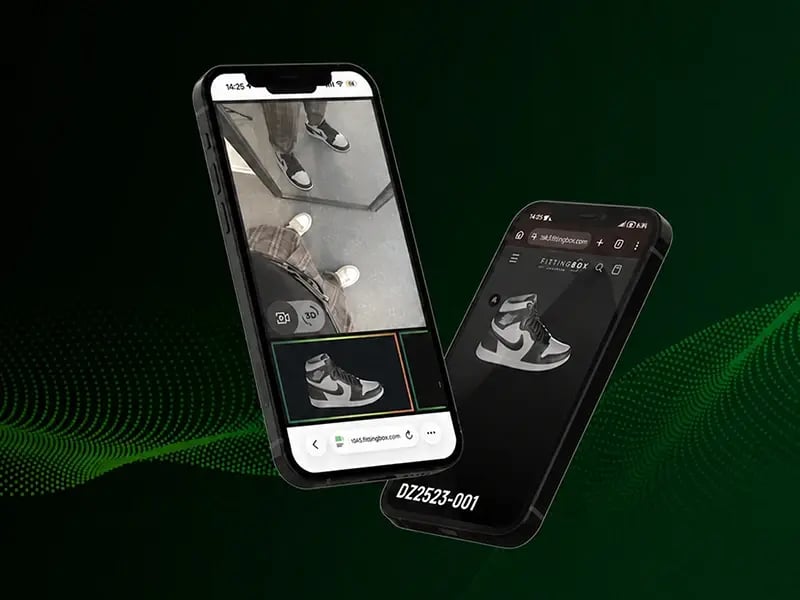
AI foot measurement usually starts with a simple customer action. The shopper may be asked to scan their foot, take a photo, stand in a guided position, or use a smartphone camera during a virtual try-on session.
Image-Based Foot Detection
The first step is foot detection. AI models analyze the image or camera feed to identify the foot area and separate it from the background, floor, socks, pants, shadows, and other visual elements.
This is where computer vision plays a central role. The system looks for patterns linked to the foot outline, toes, heel, ankle position, and visible contours.
Landmark Recognition and Measurement
After the foot is detected, AI identifies key points. These landmarks can include the heel, longest toe, widest part of the forefoot, outer foot edge, inner foot edge, and ankle area.
Landmarks help the system estimate measurements such as foot length and width. They also help understand shape, which is important because two feet may have similar length but very different forefoot width.
From Foot Scan to Fit Guidance
The table below shows how AI foot measurement virtual try-on turns a simple scan into practical ecommerce guidance. Each step supports a clearer decision before the shopper adds the product to cart.
| AI step | What it analyzes | Why it matters for footwear ecommerce |
|---|---|---|
| Foot detection | Foot outline, heel, toes, and position | Creates the foundation for reliable measurement |
| Scale estimation | Camera data, reference points, or guided positioning | Turns image data into real-world dimensions |
| Shape analysis | Length, width, volume indicators, and contours | Helps move beyond generic size charts |
| Product matching | Shoe size data, model fit, category, and feedback | Supports more relevant size recommendations |
| Virtual try-on | Foot profile and digital shoe visualization | Combines style preview with fit confidence |
How Measurement Data Connects to Virtual Shoe Fitting
AI foot measurement becomes more powerful when it is connected to product data. Measuring the foot is only one part of the process. The system must also understand the shoe.
Matching Foot Dimensions With Product Data
A shoe is not just a size number. It has a last shape, internal length, width profile, toe box structure, material behavior, heel shape, and category-specific fit.
Once the customer’s foot measurements are estimated, the system compares them with product-specific fit information. This can include size charts, brand sizing rules, model-level fit data, customer feedback, and return patterns.
Using Machine Learning for Size Prediction
AI foot measurement can also help predict the best size. A recommendation engine may combine foot dimensions, product data, brand sizing, previous purchases, customer preferences, and return history.
This is useful because the “right size” is not always a single mathematical answer. Some shoppers prefer a snug fit, while others want more room.
The Role of 3D Shoe Assets
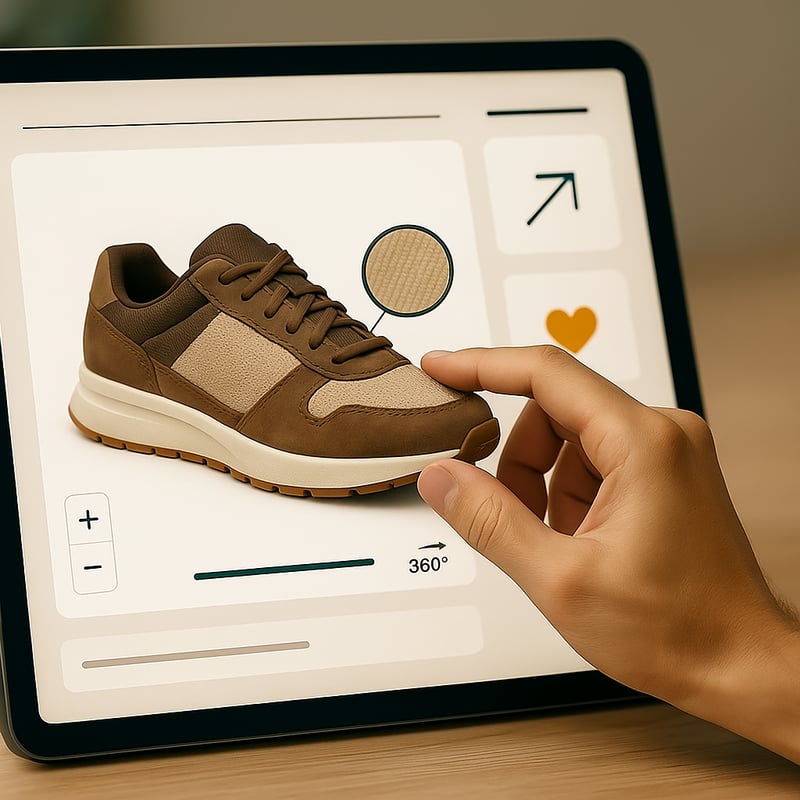
Virtual try-on is strongest when accurate product visualization is available. A high-quality 3D shoe model helps shoppers understand the design from multiple angles, while AI foot measurement helps them understand the relationship between the shoe and their foot.
For footwear brands, this creates a useful connection between digital merchandising and fit support. A 3D viewer of shoes can help shoppers inspect shape, materials, and details.
Business Value and Implementation for Footwear Brands
AI foot measurement supports several business goals. It can help shoppers move from uncertainty to confidence, while helping brands improve product discovery, digital merchandising, and post-purchase satisfaction.
Improving Purchase Confidence
Online shoe shoppers often hesitate because they cannot try the product physically. AI-powered virtual try-on reduces that hesitation by showing the product visually and adding fit-related guidance.
When combined with virtual try-on of shoes, foot measurement supports both style evaluation and fit confidence. This makes the product page more useful and more engaging.
Reducing Fit-Related Returns
Returns remain a major cost for retailers. The NRF and Happy Returns 2024 report estimated that 16.9% of annual retail sales would be returned, with total returns projected to reach $890 billion in 2024.
Footwear returns are often linked to size, fit, comfort, and expectation gaps. AI foot measurement cannot remove all returns, but it can help reduce preventable uncertainty before purchase.
Planning Implementation Across the Catalog
Footwear brands should decide which products will support virtual try-on, AI measurement, or size recommendation. Starting with bestsellers, high-return products, or strategic collections can make implementation more focused.
Catalog coverage also depends on 3D assets. Solutions for digitizing shoes in 3D can help create the assets needed for scalable visualization.
Conclusion
AI foot measurement makes virtual try-on more useful for footwear ecommerce. It connects visual product experience with fit guidance, helping shoppers make better decisions before purchase. For brands and retailers, the value goes beyond innovation. It supports conversion, customer experience, return reduction, and stronger digital merchandising across online and omnichannel journeys.

Frequently Asked Questions
How does AI foot measurement work in virtual try-on?
AI foot measurement uses computer vision to detect the foot, identify key landmarks, estimate scale, and calculate dimensions such as length and width. These measurements can then be compared with shoe data to support size recommendations and more personalized virtual try-on experiences.
Can AI foot measurement reduce shoe returns?
AI foot measurement can help reduce fit-related returns by improving size guidance before purchase. It cannot eliminate all returns, since comfort and preference still matter, but it can reduce uncertainty and help shoppers choose a more suitable size or model.
What data does a footwear brand need for AI shoe fitting?
A brand needs accurate product size data, model-level fit information, quality images or 3D assets, and clear return reason tracking. Customer feedback, reviews, and exchange data can also improve the recommendation model over time.
Is AI foot measurement useful without 3D shoe models?
Yes, AI foot measurement can support size recommendations without 3D models. However, 3D shoe assets improve the visual part of virtual try-on by helping shoppers inspect product shape, proportions, and design details more clearly.
- 2024 Consumer Returns in the Retail Industry Report (2024) https://a-us.storyblok.com/f/1021220/x/84c63128d9/2024-consumer-returns-in-the-retail-industry-report_12-5-24-2.pdf
- Google Shopping’s Try On Tool Adds Shoes, Expands to New Countries (2025) https://blog.google/products-and-platforms/products/shopping/virtual-try-on-shoes/
- SiCo: A Size-Controllable Virtual Try-On Approach for Informed Decision-Making (2024) https://arxiv.org/abs/2408.02803
- Diffusion Model-Based Size Variable Virtual Try-On Technology and Evaluation Method (2025) https://arxiv.org/abs/2504.00562

Fittingbox Footwear
Fittingbox Footwear is a dedicated business unit of Fittingbox, specialized in 3D and augmented reality solutions for the footwear industry. It offers ultrarealistic 3D digitization, immersive virtual try-on, and flexible integration — ranging from plug-and-play tools to fully customizable implementations.